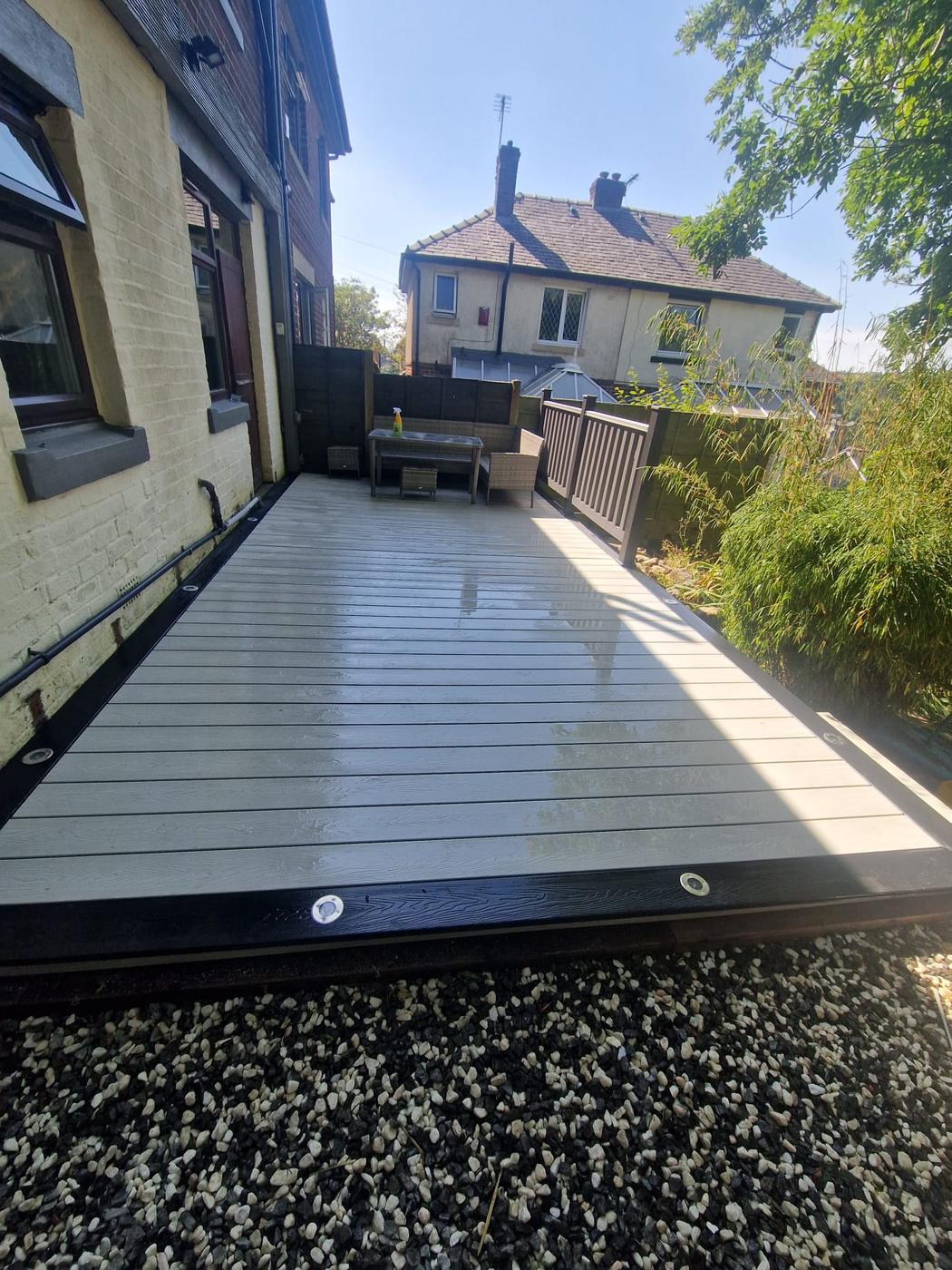
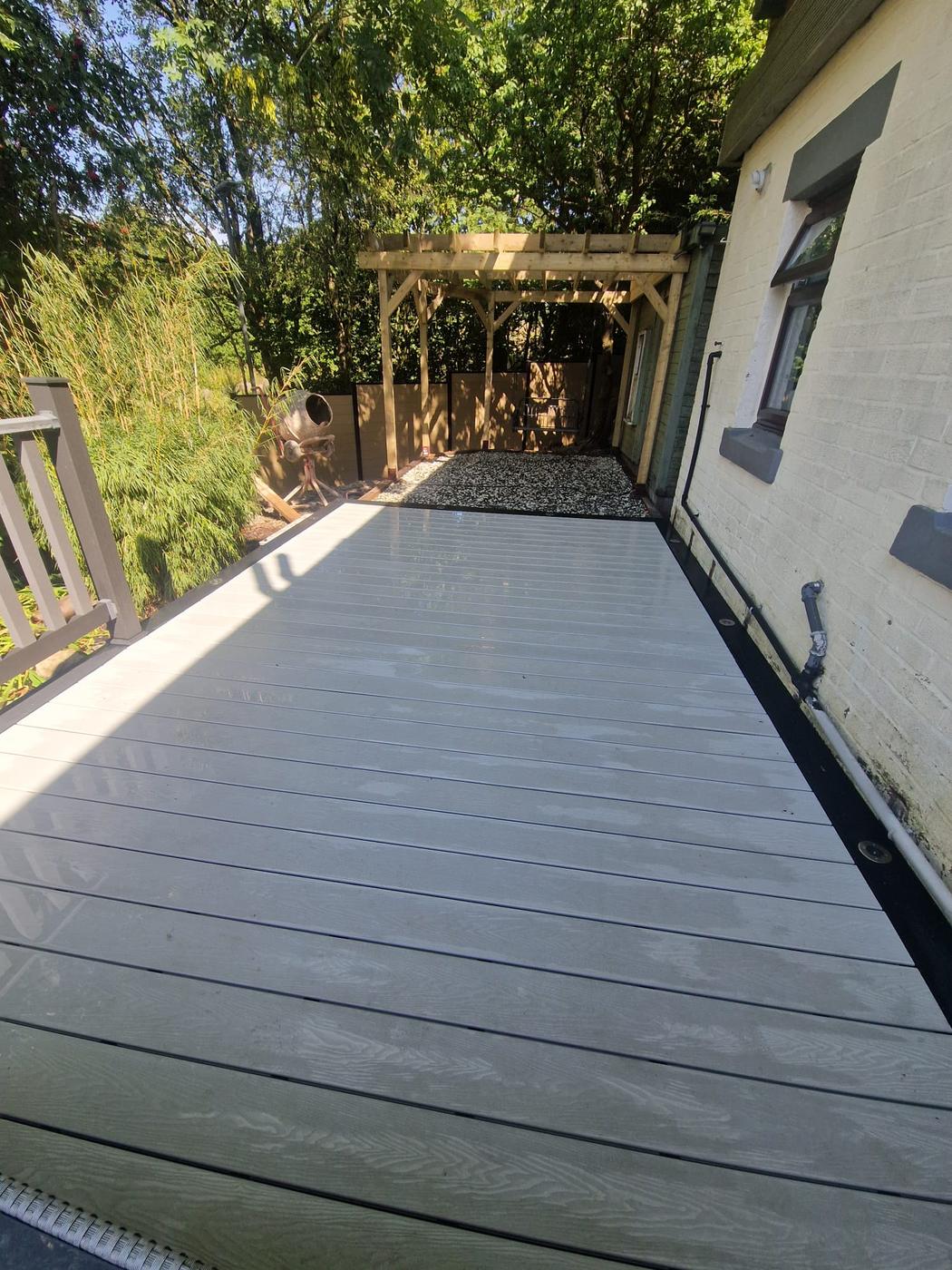
Is composite decking worth it over timber?
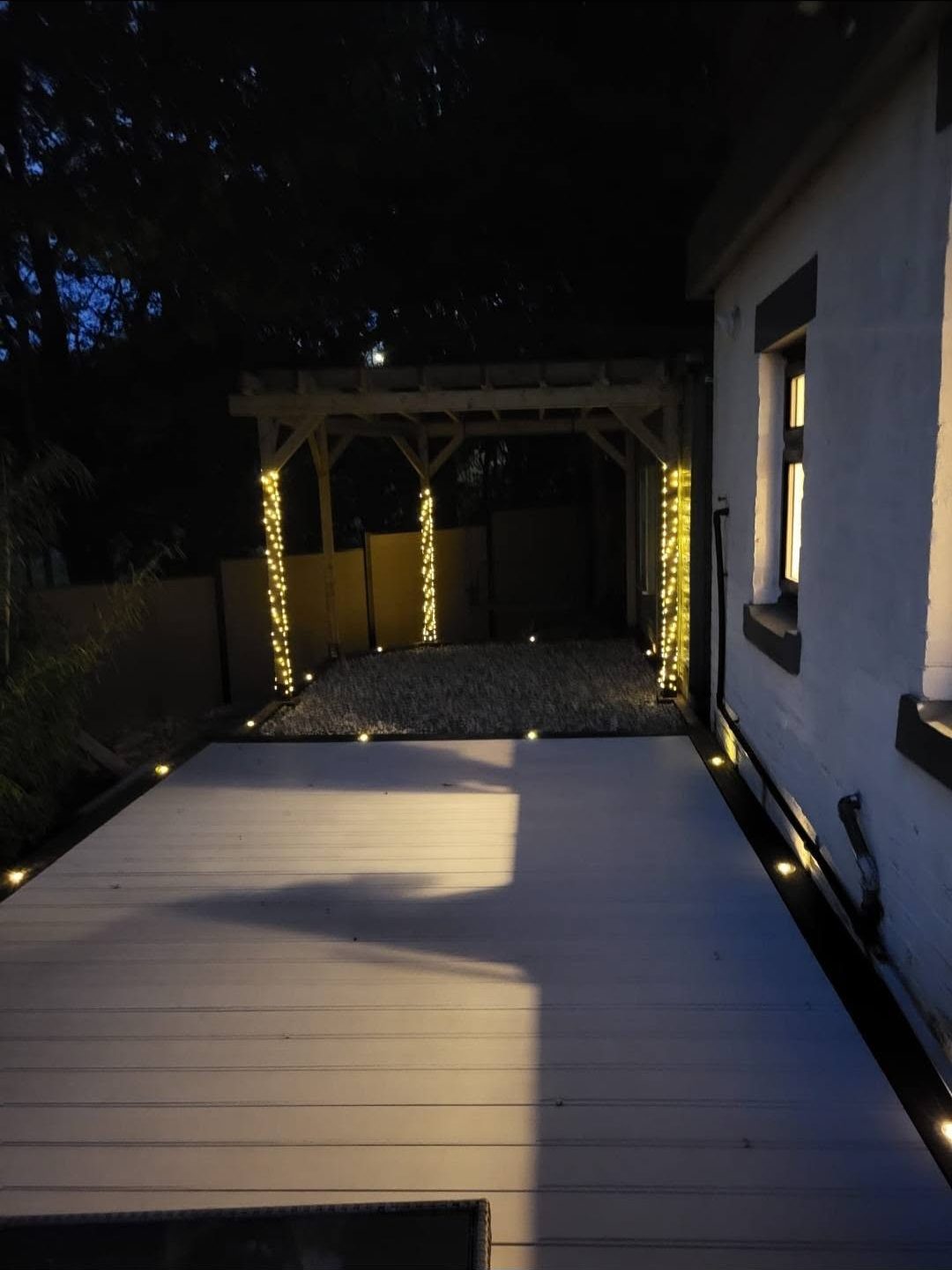
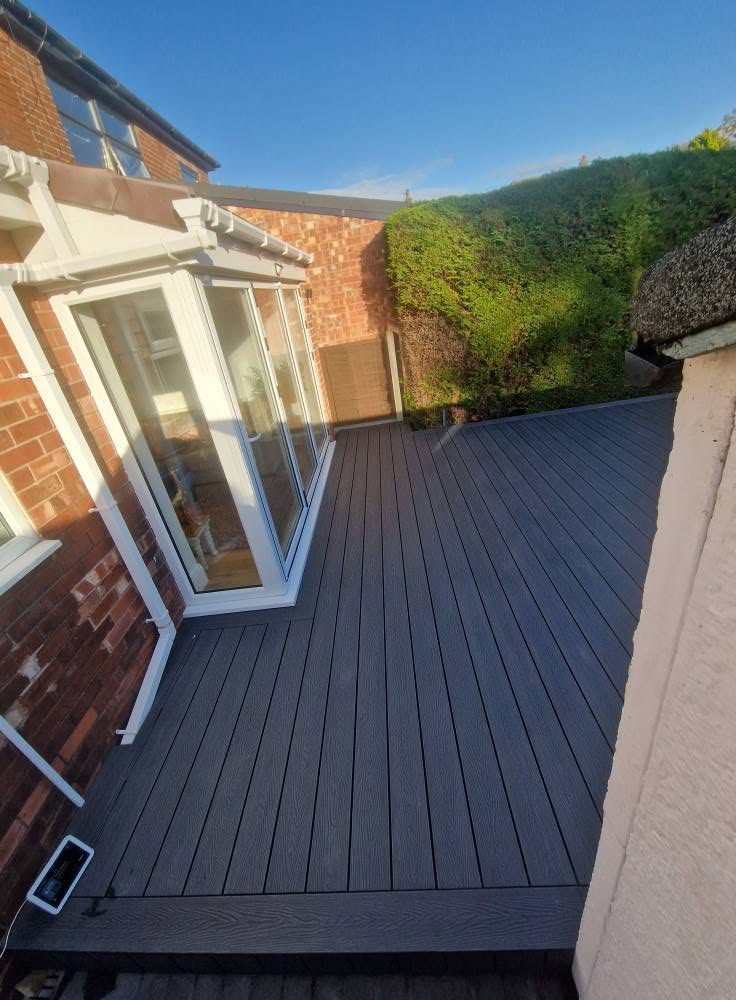
For most gardens around Stockport, yes. Timber is cheaper on day one and it looks good for a couple of years, then it wants cleaning, sanding and staining every spring, and in a shaded north facing garden it goes green and slippery faster than anyone expects. Composite costs more up front and then costs you a wash down. Where timber still wins is on budget jobs and on anything you might change again in five years, and we will say so rather than push you at the dearer option.
Can you replace decking that has rotted?
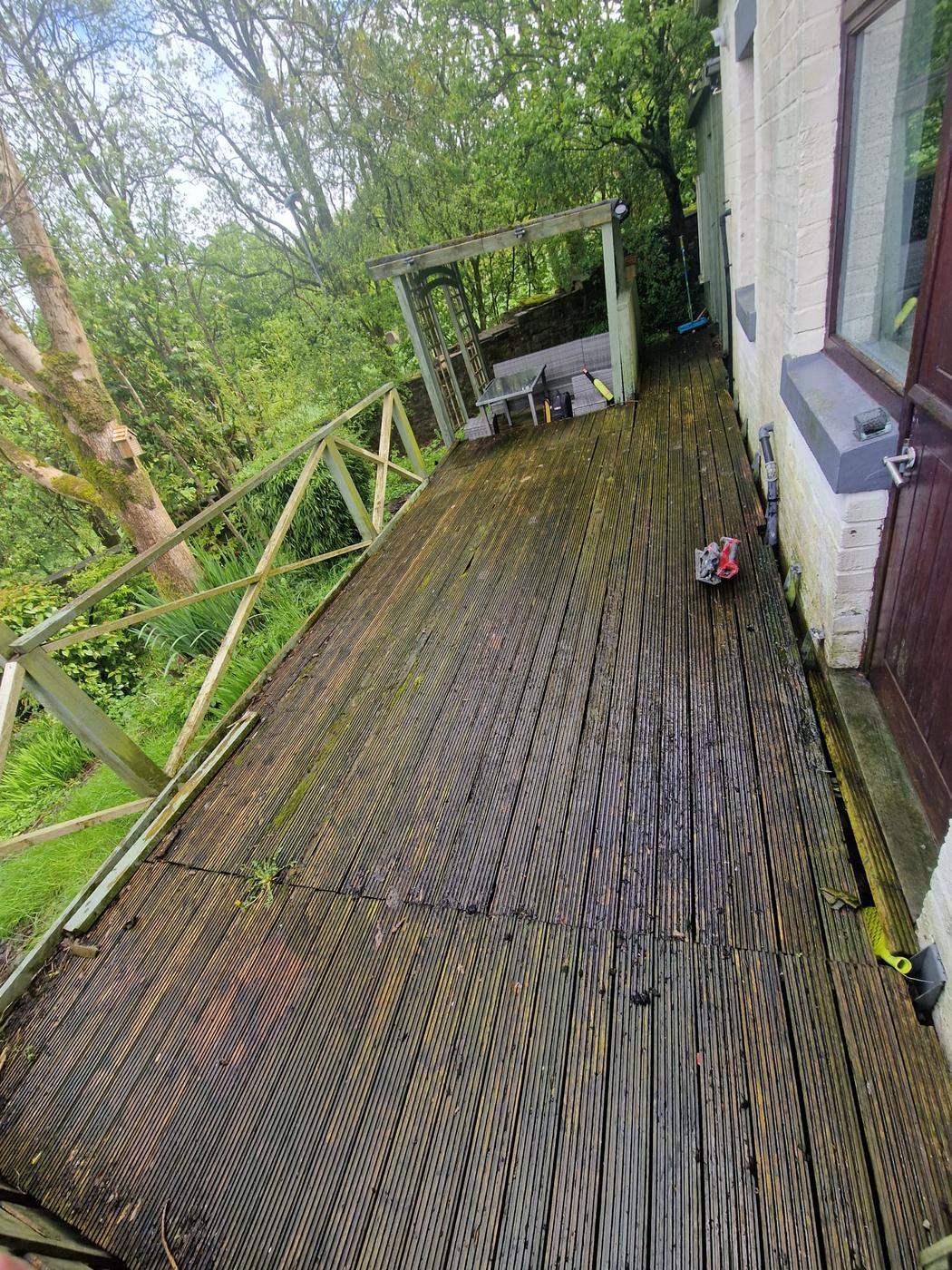
Yes, and it is one of the jobs we do most. The old boards and frame come out, and then we look at what was underneath, because decking almost always rots from the frame and the ground up rather than the top down. Posts that were knocked into soil, no gap for air, no fall on the ground below: those are the reasons it failed, and putting new boards on the same frame just buys you a few years before you pay again.
My garden slopes. Can anything be done with it?
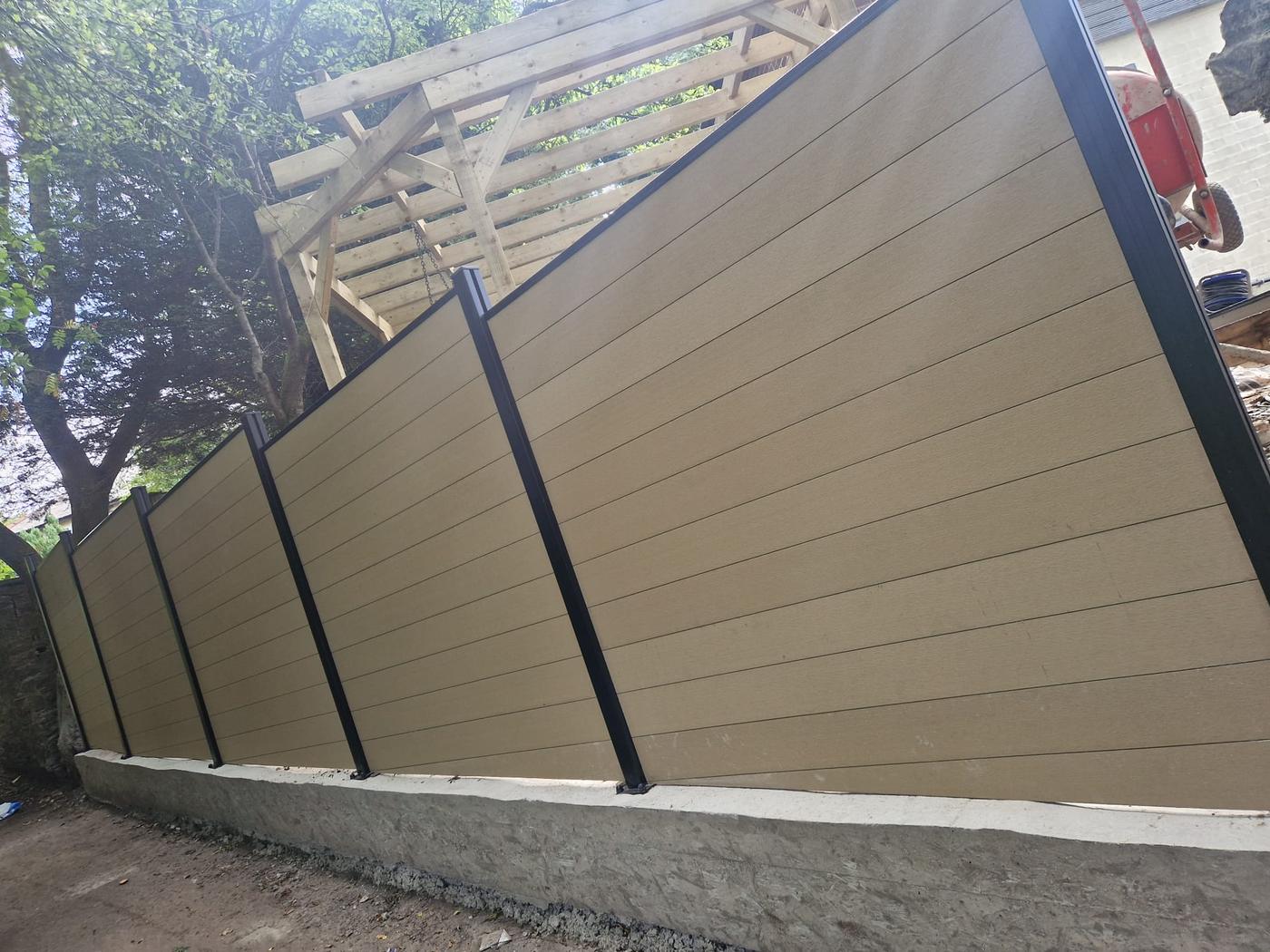
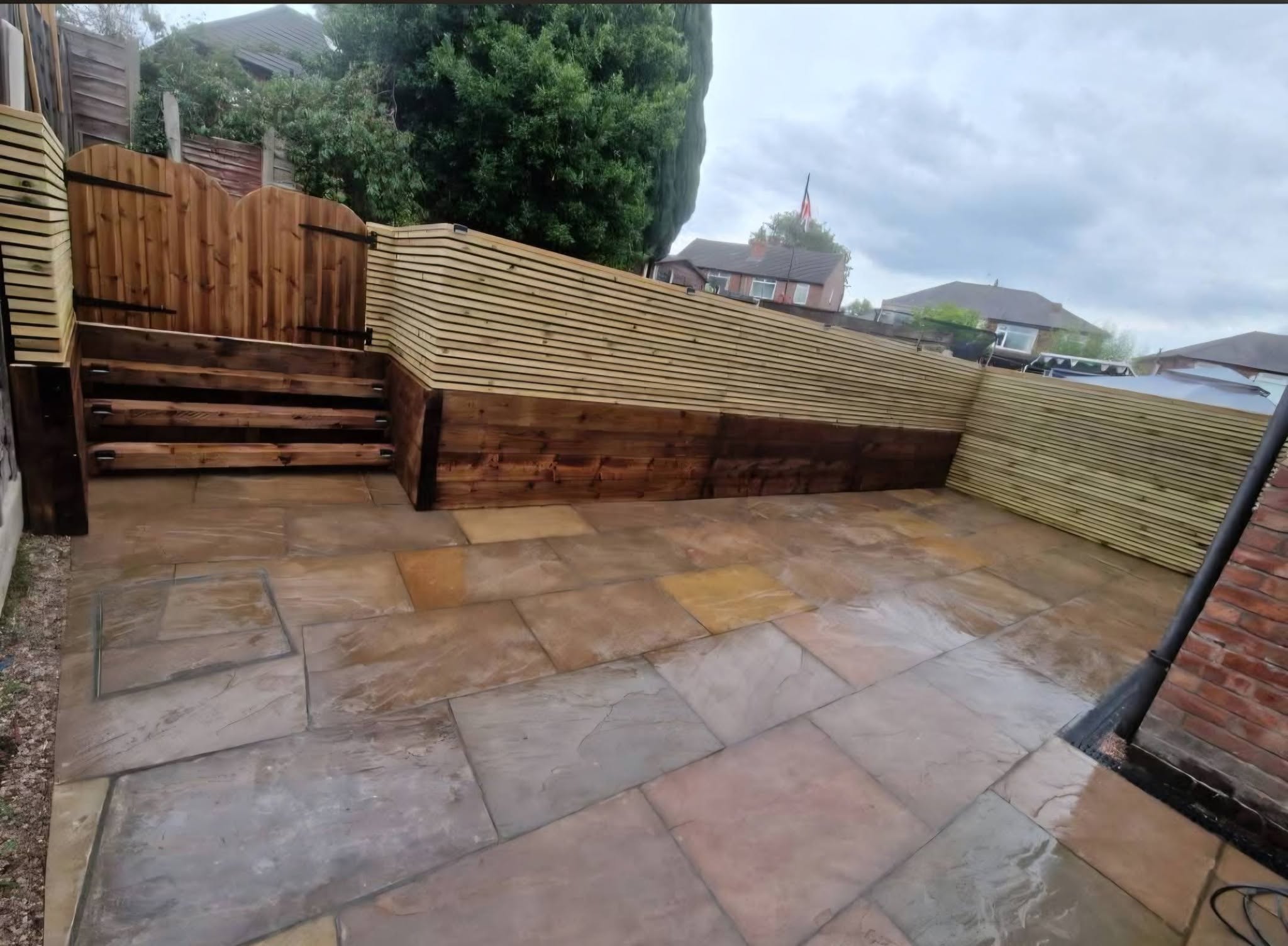
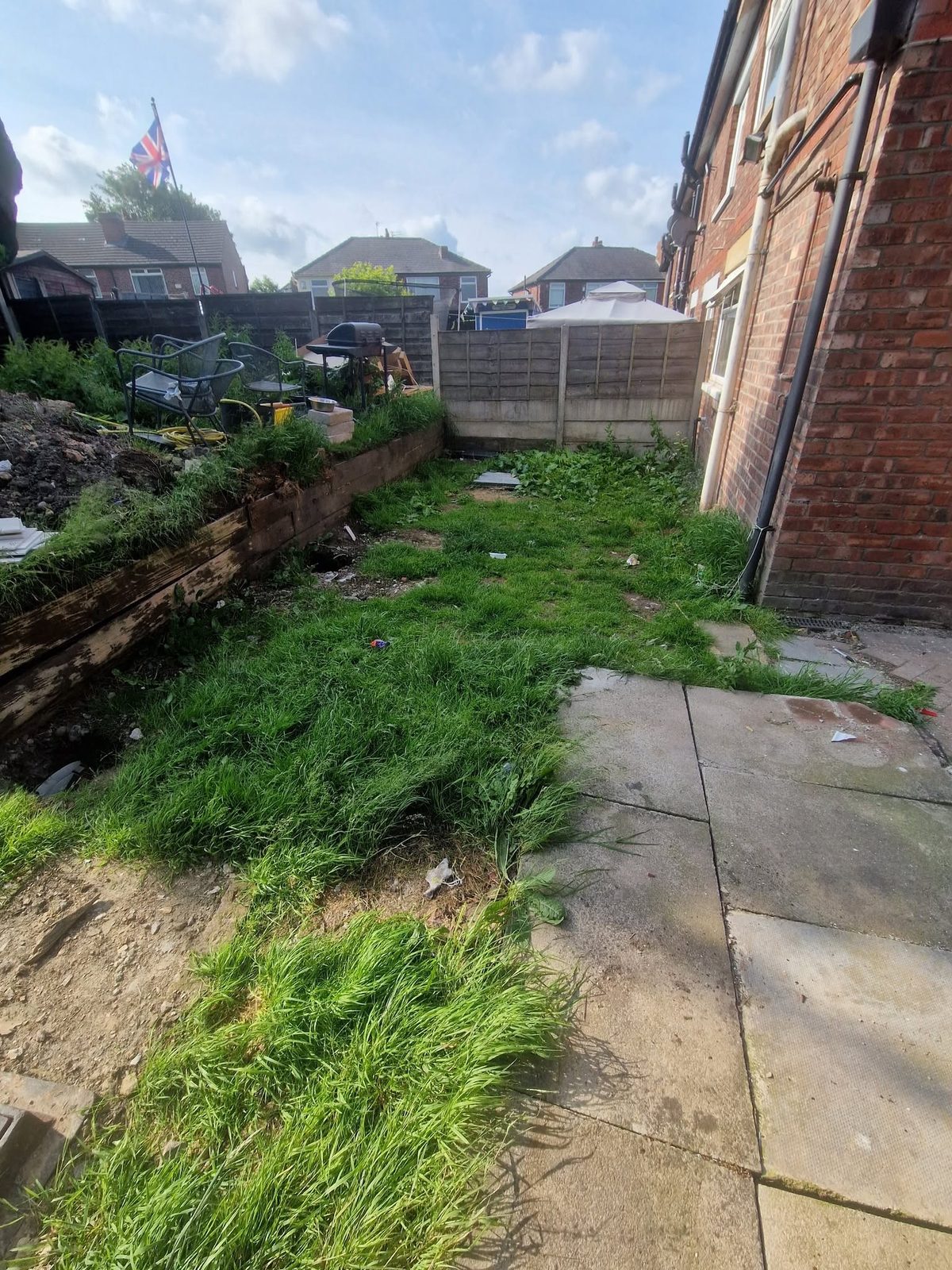
Usually a great deal, and sloping plots are common here. The options are terracing it with sleeper or block retaining walls, building a raised deck out to a level, or cutting into the slope and holding it back. Which one is right depends on how much fall there is, what is at the bottom of it and what your neighbours are retaining. We will come and look, tell you what each approach costs and be honest about which one turns the garden into space you will actually use.
Do you do patios and paths as well as decking?
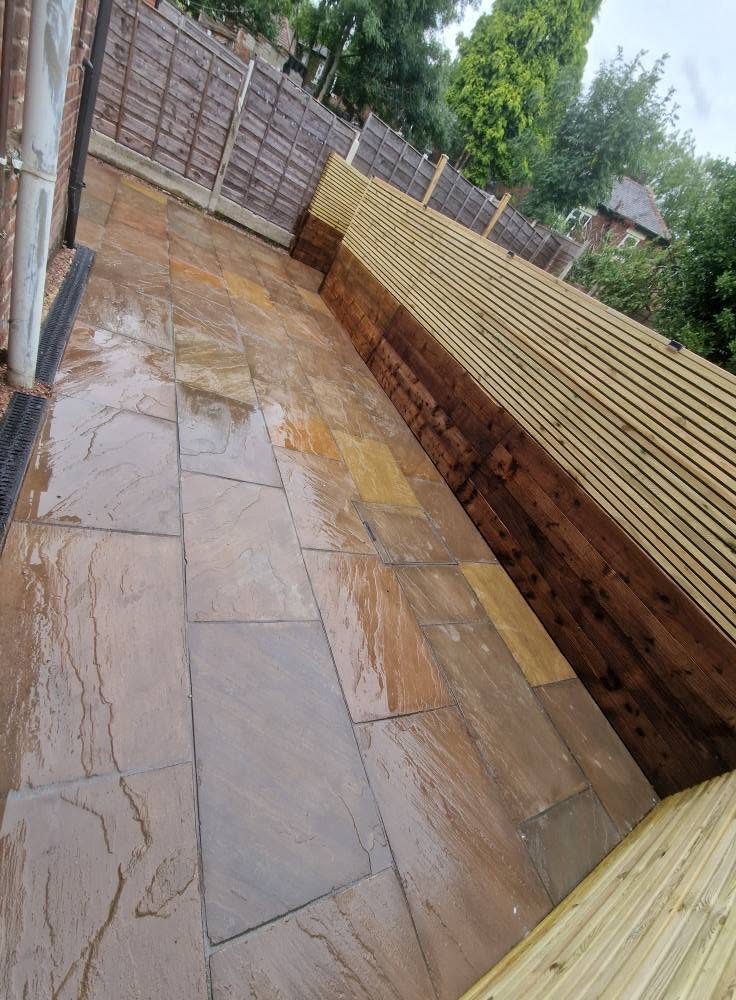
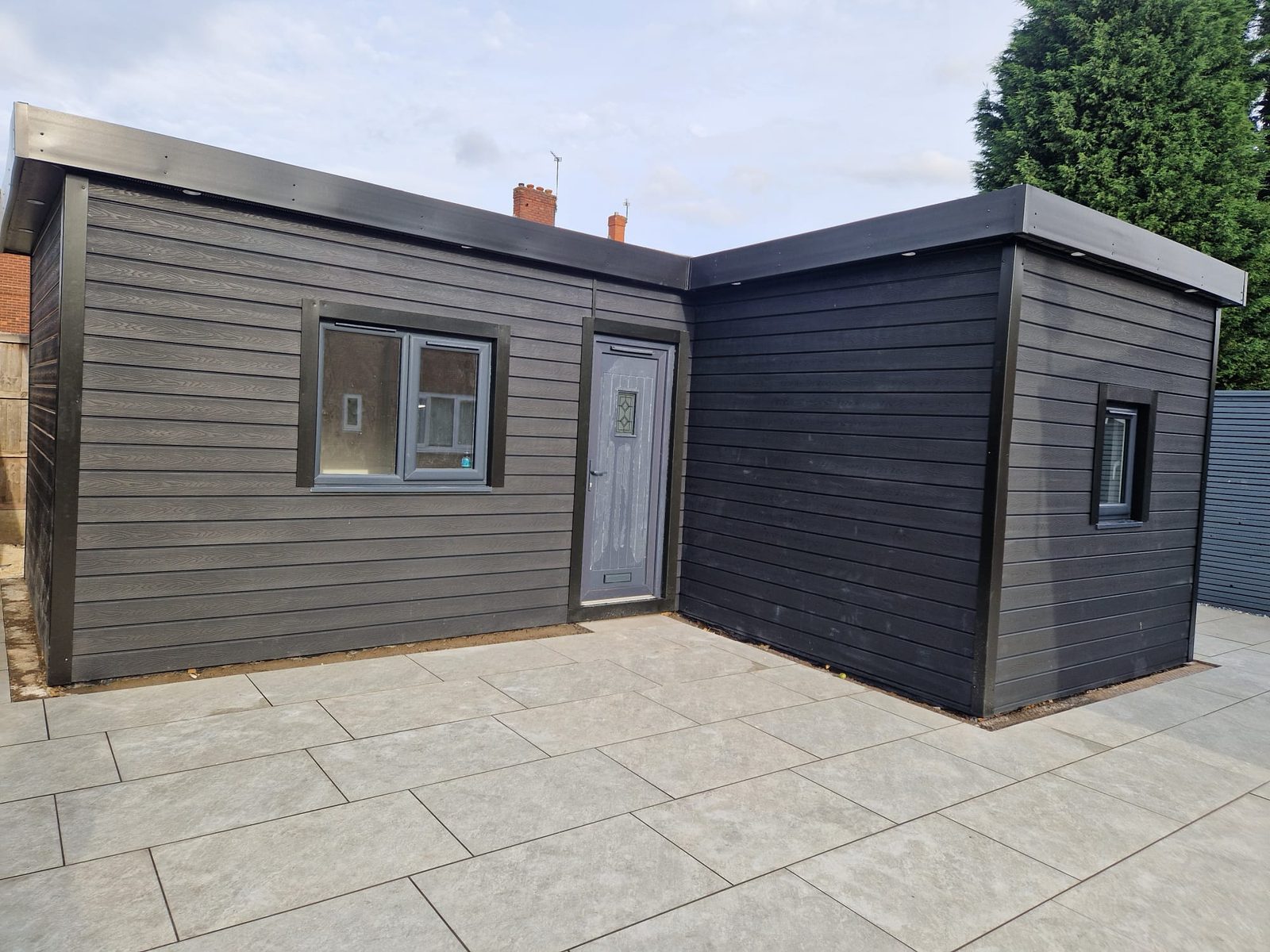
Yes. Indian stone, porcelain, block paving, gravel and the paths and steps that join it all up. The bit that matters is under the slabs: dug out to a proper depth, hardcore compacted, and everything laid to a fall away from the house with the damp course kept clear. Nearly every failed patio we get called to look at was laid straight onto soft ground or brought up too high against the wall.
Will you take the old garden away?
Yes. The old decking, broken slabs, rubble and spoil all leave with us, and the skips or grab wagons are arranged and priced in rather than added on afterwards. On a garden job the muck away is a real cost, so it is in the quote where you can see it instead of appearing at the end as an extra.
What time of year is best for garden work?
Spring through to autumn is easiest and it is when most people ask, which means it books up. Groundwork, fencing and deck frames are perfectly possible through the winter, and concrete and paving can be laid in cold weather provided it is not going to freeze on us. If you want the garden finished for next summer, the quiet months are a good time to talk about it and often a good time to get booked in.